The 2026 Walleye Quota Is a Pricing Signal: Reading a Mille Lacs Cabin Listing Past the Photograph
July 23, 2026
July 23, 2026
Two cabins sit side by side on the east shore. Same square footage, same year, same 100 feet of frontage on the listing sheet, same asking price near the lake's July average. One will out-earn the other by a wide margin over the next five summers, and one will hit a ceiling the moment the buyer tries to add a bunkhouse. Nothing in the MLS photos tells you which is which.
The information that does tell you lives in two documents most buyers never open: the annual walleye harvest agreement between the state and the Ojibwe Tribes, and the Mille Lacs County shoreland ordinance. Read together, they are the pricing engine underneath Mille Lacs Lake.
Every March the Minnesota DNR publishes a number that most Twin Cities buyers scroll past. This year that number moved. The 2026 walleye harvest is set at 105,300 pounds for state-licensed anglers and 79,700 pounds for Tribal fishing, following a 2025 season where the state's share was set at 113,600 pounds. This year's harvest level reflects a slight decline in the adult walleye population that was observed in last fall's assessment netting.
The regulation itself stayed generous. The three-walleye limit takes effect with the open water season opener on May 9. Harvested walleyes must be at least 17 inches, and only one fish over 20 inches may be kept. The regulation runs through Nov. 30.
What is genuinely new is the flex band. Building on last year's framework, the 2026 agreement provides the DNR with increased flexibility to manage the fishery. Because angler turnout and success rates are difficult to predict, the state is permitted to keep walleye fishing open even if harvest totals exceed initial projections, provided the total remains within 15% of the state's annual share. If the state overshoots, adjustments could include moving to catch and release only for a portion of the season, if needed.
That is not fishing trivia. That is the operating manual for every guided-launch resort, every VRBO-facing cabin, and every "income-producing" listing on the lake. A property whose rental calendar depends on August walleye harvest carries mid-season regulatory risk that a portal does not price. A property positioned for muskie, smallmouth, family swim beach, or fall duck season does not.
As of July 12, 2026 there were 106 active Lake Mille Lacs property listings for sale with an average listing price of $423,941. The highest-priced waterfront listing was $2,895,500, while the lowest-priced waterfront listing could be purchased for $11,995.
That spread, roughly 240x from the cheapest waterfront lot to the top estate, is wider than any comparable Minnesota lake this size. The quota decision is one of the reasons. When the harvest ceiling tightens, three things move at once:
Cabins marketed on walleye harvest tighten their rental windows toward the May-through-early-July opener rush. Cabins marketed on the sand-beach and family-recreation side see their pricing decouple from the fishing calendar. And resort parcels, where income projections were built on 2019-era harvest assumptions, quietly re-underwrite.
The listing language gives it away once you know to look. Copy that leans on "guided fishing launches" and "ice road access" is priced against a fishery that now has a mid-season kill switch. Copy that leans on "sugar-sand beach," "west-facing sunsets," "protected bay," or proximity to Grand Casino and Northwood Hills Golf Course is priced against a lifestyle demand curve the quota does not touch.
A buyer comparing two nearly identical cabins should be asking a single question the listing does not answer: which harvest year did the seller underwrite their asking price against.
The second document is quieter and more permanent. Shoreland is land located near public waters. Areas subject to shoreland regulations include land located within 1,000 feet of the ordinary high water level of a lake, pond, or flowage. On Mille Lacs, essentially every cabin lot sits inside that overlay.
Three provisions matter most when a buyer is deciding what a cabin can become:
Impervious cover. In order to minimize overland runoff and reduce the amount of contaminants to enter a body of water, the state shoreland rules limit the total coverage of impervious surfaces to 25 percent of the lot area. On a half-acre lot that is roughly 5,400 square feet total for house, garage, driveway, patio, and any future addition combined. Many of the older lake cabins already sit close to that cap.
Guest cottages and bunkhouses. A guest cottage may not cover more than 700 square feet and not exceed 15 feet in height. That is the ceiling on the multigenerational-use pitch you see in half the current listings.
Deck additions on the water side. For a legacy cabin sitting too close to the ordinary high water level to meet current setbacks, decks that do not meet setback requirements from public waters may be allowed without a variance to be added to structures existing on the date the shoreland structure setbacks were established, if a thorough evaluation of the property and structure reveals no reasonable location for a deck meeting or exceeding the existing ordinary high water level setback of the structure, and the deck encroachment toward the ordinary high water level does not exceed 15 percent of the existing shoreline setback of the structure or does not encroach closer than 30 feet, whichever is more restrictive.
Alteration permitting is triggered earlier than most buyers assume. Shoreland Alteration Permits are required for the movement of more than ten cubic yards of material on steep slopes or within shore or bluff impact zones. Ten cubic yards is one small dump-truck load. A new stone patio, a re-graded lakeside walkway, or a retaining wall crosses that line without effort.
Frontage on Mille Lacs deserves its own read. The lake's cities and townships have historically enforced minimum lakeshore rules that predate current portals, and enforcement history is uneven. The Wahkon dock dispute made this concrete: a buyer had purchased a property with 20 feet of shoreline and were planning a 64-foot dock with a 12-foot boat lift and 8-foot platform, but the 20-foot strip of property was approved by a former council in violation of the Shoreland Ordinance requiring 75 feet of lakeshore.
The lesson from that case is not the specific footage. It is that recorded frontage, ordinance-conforming frontage, and dock-usable frontage are three different numbers. Any listing that hinges on frontage under the local minimum, or on a narrow deeded strip to the water, needs the plat and the township or city minimum pulled before earnest money.
Mille Lacs is not one market. It behaves as several, and the bay names carry real signal. The northwest side listings are being marketed on 150 feet of prime, level shoreline and breathtaking big-sky lake views, positioning that reads to a sunset-and-view buyer. The east side, in and around Isle, is dominated by walleye-first inventory: a spacious Isle home sits on 104 feet of sandy lake shore in Isle Bay, on the east side of the lake. Wigwam Bay listings continue to be pitched on income potential. Agate Bay, Big Point, Mac's Twin Bay, and Cove Bay each carry different frontage geometry and different wind exposure, which shows up in dock survival and in shoreline-restoration cost over time.
Location relative to the lake's small commercial anchors matters for resale liquidity. New construction with a private slip is being marketed as just 5 miles north of Grand Casino, 5 miles south of Garrison, and directly across from Northwood Hills Golf Course & Bar & Grill. That corridor moves differently in a slow season than an isolated south-shore parcel does.
For a buyer walking into the second half of the 2026 season, the sequence of questions matters more than any single answer:
None of these questions require legal or tax advice to ask. They only require pulling the plat, the county's shoreland pages, and the current DNR regulation before the inspection window closes.
Does the 2026 walleye quota affect resale value on a family cabin used for personal recreation only? Indirectly. The lake's brand nationally is a walleye brand, so aggregate buyer sentiment tracks the fishery even for buyers who never fish. A property positioned on beach, sunsets, or family recreation is less exposed but not immune.
Can a mid-season shift to catch-and-release actually happen in 2026? Yes. The state will adjust regulations during the season if needed to prevent harvest from significantly exceeding its 105,300 pound share. These adjustments could include moving to catch and release only for a portion of the season, if needed. Rental income projections for August and September should be stress-tested against that scenario.
How binding is the 25% impervious cap in practice? It is a hard ceiling under state rules, administered locally. The Board of Adjustment is given the authority to grant variances from the requirements of the zoning ordinance. Typical variances are to reduce setbacks to the property lines, reduce the required lot area or to increase the amount of impervious surface allowed in the shoreland area. Variances exist, but they are neither routine nor guaranteed, and they are on the buyer's timeline.
Where does the average listing price sit right now? As of July 12, 2026 there were 106 active Lake Mille Lacs property listings with an average listing price of $423,941. The number is useful as a boundary marker, not as a comp.
The buyers who do well on Mille Lacs in the back half of 2026 will be the ones who priced the quota, priced the shoreland cap, and priced the bay before they priced the cabin. The photograph is the last thing to trust. Devon White works with buyers and sellers on Mille Lacs and across Minnesota's premier lakes, quietly and by referral. Schedule a Private Tour to walk a shortlist with the numbers already read.


They are not selling because the market is hot. They are selling when life circumstances require it!

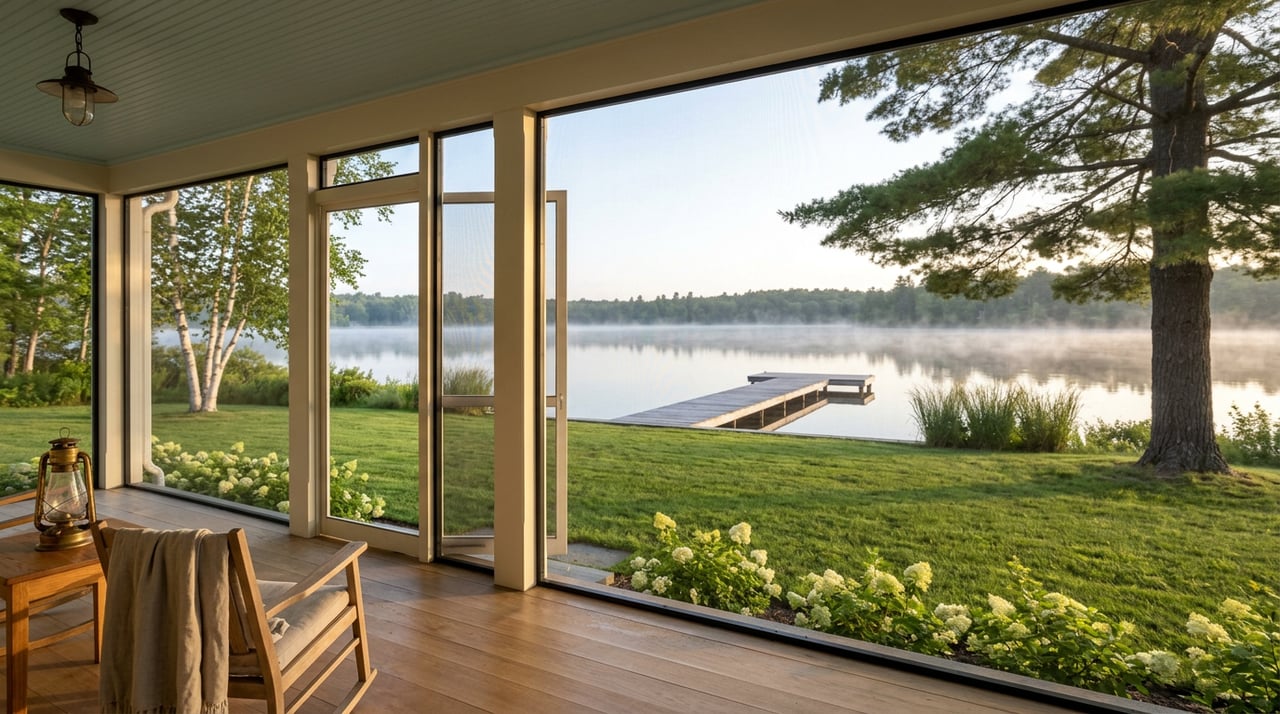
Sleep with the windows open and wake up to loons. Have a bonfire that goes until midnight.
Whether you're searching for your first lakeshore retreat or selling a legacy estate, Devon brings the network, the knowledge, and the discretion the transaction deserves. Every conversation is private. Every showing is personal.
Get In Touch With Our Team To Learn More
Address 700 N Washington Ave, Ste 101 Minneapolis, MN 55401